


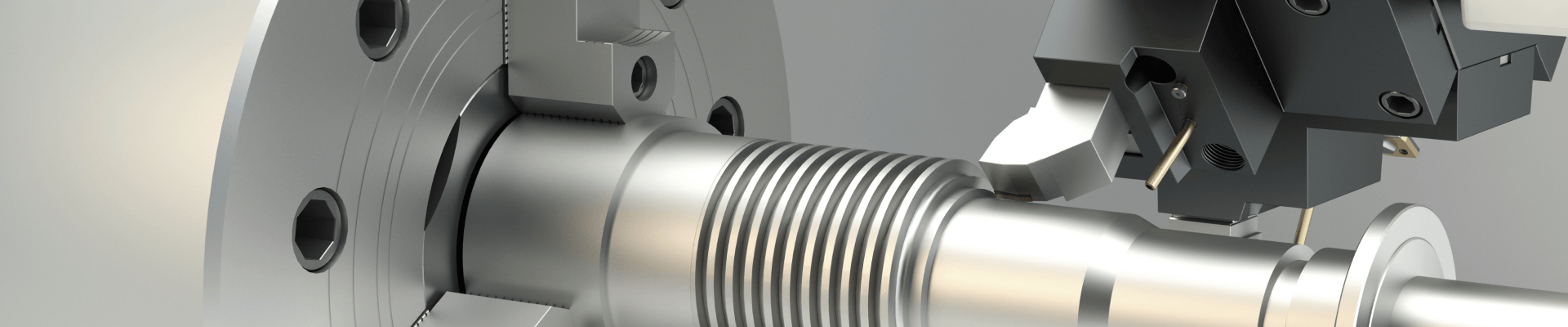


CNC precision machining technology, with its advantages of high precision, high efficiency, and high stability, has become one of the core forces driving the development of modern manufacturing. It is widely used in numerous industries, providing solid technical support for product manufacturing across various fields.
I. Aerospace Field
In the aerospace sector, where precision and reliability are of utmost importance, CNC precision machining plays a pivotal role. As the "heart" of an aircraft, the aero engine's core components, such as turbine blades and combustion chambers, require extremely high precision and complex curved surface geometries. CNC precision machining technology can accurately manufacture these components, ensuring the engine's high performance and reliability. For example, the machining accuracy of turbine blades must reach the micron level. Through five-axis linkage CNC machining centers, precise milling of the blades' complex curved surfaces can be achieved, ensuring their aerodynamic performance.
The manufacturing of spacecraft also relies heavily on CNC precision machining. Structural components of satellites and precision parts of navigation systems must be manufactured under strict precision control. CNC machining can guarantee the dimensional accuracy and surface quality of these parts, meeting the requirements for spacecraft operation in harsh space environments.
II. Automotive Manufacturing Field
The automotive industry is one of the important application fields of CNC precision machining. The manufacturing of key components such as engines, transmissions, and steering systems depends on CNC precision machining technology. Taking the engine cylinder block as an example, the machining accuracy of its internal cylinder bores and crankshaft bores directly affects the engine's performance and reliability. CNC machining centers can achieve high-precision machining of the various hole systems in the cylinder block, ensuring that indicators such as dimensional accuracy, cylindricity, and coaxiality meet design requirements.
The manufacturing of automotive parts also extensively adopts CNC precision machining. Components such as wheel hubs and brake discs can be produced efficiently and accurately through CNC lathes and machining centers, improving product quality and production efficiency.
III. Electronic Information Field
With the rapid development of the electronic information industry today, CNC precision machining technology provides strong support for the miniaturization and high performance of electronic products. The housings and internal structural components of products such as mobile phones and computers require precision machining. For example, the aluminum alloy housings of mobile phones need to be processed through CNC milling, drilling, and other processes to ensure exquisite appearance and structural strength.
The manufacturing of electronic chips also cannot be separated from CNC precision machining technology. Precision components of lithography machines and molds for chip packaging all require high-precision machining to ensure the performance and reliability of the chips.
IV. Medical Device Field
The quality of medical devices is directly related to people's life and health, so the requirements for machining precision and quality are extremely high. CNC precision machining technology has been widely applied in the manufacturing of medical devices. For instance, the manufacturing of precision medical devices such as pacemakers and artificial joints requires precise control of part dimensions and surface quality. CNC machining can ensure the precision and consistency of these parts, improving the safety and effectiveness of medical devices.
The manufacturing of surgical instruments also relies on CNC precision machining. The edge precision and surface finish of instruments such as scalpels and forceps have a significant impact on surgical outcomes. Through CNC machining, high-quality surgical instruments can be produced, providing better tool support for medical procedures.
V. Energy Field
In the energy field, CNC precision machining technology also has extensive applications. Key components in oil extraction equipment, such as drill bits and valves, must maintain high precision and reliability under harsh working conditions. CNC machining can produce parts that meet these requirements, improving the efficiency and safety of oil extraction.
Components of wind power generation equipment, such as blades and gearboxes, also require precision machining. Through CNC machining technology, precise manufacturing of the blades' complex curved surfaces can be achieved, improving the power generation efficiency of wind turbines.
CNC precision machining technology, with its outstanding performance and broad applicability, demonstrates tremendous application value in multiple fields including aerospace, automotive manufacturing, electronic information, medical devices, and energy. With the continuous advancement of technology, CNC precision machining technology will keep innovating and developing, providing stronger technical support for the development of even more fields.
 Tel: 139 6254 0906
 Email: dengliangyu@suzhouleo.com
 Address: No. 118 Chang'an Road, Youyi Industrial Zone, Songling Town, Wujiang City