




The surface polishing and finishing work on molds of mechanical components is not only affected by the processing technology and polishing machinery, but also continues to be influenced by the mirror finish quality of the part material, a factor that has not received sufficient attention in current processing. This also indicates that polishing itself is affected by the material. Although processing technologies to enhance surface performance are continuously innovating and upgrading, the most widely used methods in precision component processing remain hard coating deposition, nitriding, and nitriding technologies.
Because nitriding technology can achieve excellent surface performance, and the processing technology of nitriding has high compatibility with the heat treatment process of steel in mechanical component machining, and the nitriding temperature is low, there is no need for intense cooling processes after nitriding treatment. As a result, deformation of mechanical components will be minimal, making nitriding one of the initially selected technologies for enhancing surface performance during component processing, and it is also currently the most widely used.
During the processing, there are certainly things we should pay attention to. Because at work, a moment of carelessness can easily lead to problems, and problems directly affect the quality of the product. Therefore, to effectively prevent such occurrences, we need to be careful during manufacturing.
When problems arise, they must be addressed immediately, but before handling them, we should first find out what the cause is and then proceed. So, let's now understand what the causes of deformation in mechanical component parts are.
1. Internal force effects lead to changes in part processing accuracy
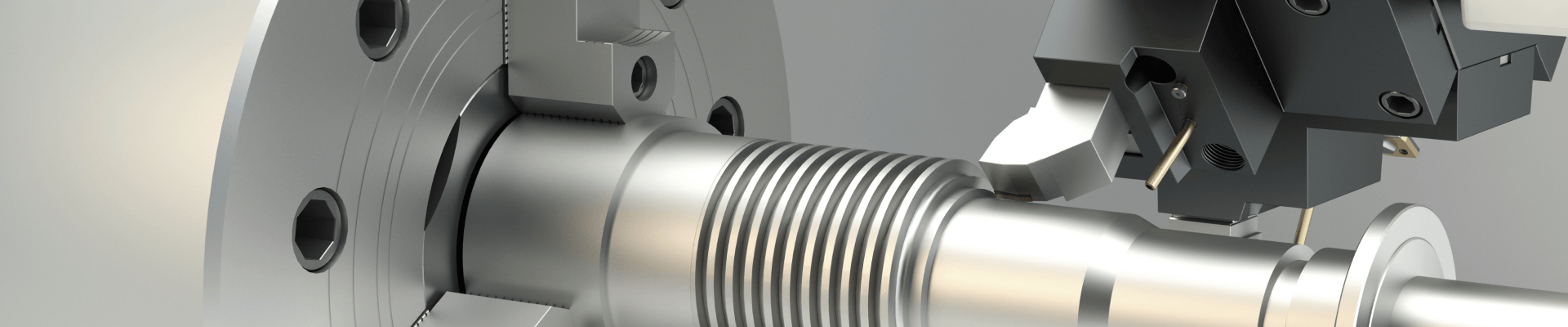
During CNC machining, the effect of cohesion is generally used, with the three-jaw or four-jaw chuck of the CNC machine clamping the part tightly, and then processing the mechanical part. Additionally, to better ensure that the part does not loosen under force and to reduce the actual effect of internal axial force, the clamping force needs to exceed the cutting speed of the machinery. The clamping force increases with the expansion of the cutting speed and decreases as it reduces. Such operation ensures that mechanical parts remain stable under force throughout the processing. However, after the three-jaw or four-jaw chuck is released, the processed mechanical parts will differ significantly from the original, some showing irregular shapes, some showing elliptical shapes, with large deviations.
2. Elastic deformation caused by external force effects
The key reasons for elastic deformation in parts during mechanical component processing include several aspects. First, if some parts have sheet-like structures internally, higher requirements are placed on the operation method; otherwise, when operators position and clamp the parts, they cannot match the overall planning of the drawings, easily leading to elastic deformation. Second, unevenness of the CNC machine and fixtures causes uneven force distribution on both sides when the part is fixed, resulting in the side with less force effect during cutting undergoing translational movement and deformation. Third, improper positioning of the part during processing reduces its stiffness and compressive strength. Fourth, the presence of cutting speed is also one of the reasons causing elastic deformation in parts. These different causes of elastic deformation all indicate the impact of external force effects on the processing quality of mechanical component parts.
3. Deformation problems easily caused after heat treatment processing
For sheet-like mechanical parts, due to their large length-to-diameter ratio, they easily exhibit conical bending after heat treatment. On one hand, a bulging condition in the middle may occur, with the plane direction expanding; on the other hand, due to various external factors, the part may experience bending. The occurrence of these deformation problems is not only because the thermal stress of the part changes after heat treatment, but also because the operator's technical knowledge is not solid, and they do not understand the structural stability of the part, thereby increasing the probability of part deformation.
During use, the mechanical properties of mechanical components are higher than those of cast iron, but the casting performance of such materials is somewhat poorer. During the manufacturing process, their melting point is higher compared to other materials. There are many issues to pay attention to during processing, mainly because the fluidity of molten steel is relatively poor. During processing, to prevent insufficient pouring or cold shuts in steel castings, the wall thickness of steel castings should not be less than 8mm.
The structural force of the pouring system is relatively simple. During use, the cross-sectional dimensions in the equipment should be larger than those of cast iron, so that hot molds or dry molds can also be used during processing. Temperature determines the good fluidity of the melt during the transfer process. Choosing the temperature of mechanical components should be based on factors such as transfer distance, temperature drop during transfer, alloy, specifications, and flow rate. The mechanical component temperature is 50 to 110°C higher than the alloy liquidus temperature. The manufacturing temperature can ensure good fluidity of the melt during transfer. When selecting the casting temperature of the equipment, it needs to be determined based on factors such as transfer distance and temperature drop during transfer.
The crack tendency of mechanical components is relatively low. During use, it is necessary to ensure that the alloy has good degassing and feeding capabilities, so that conditions for sequential crystallization can be created, thereby increasing density. Generally, the casting temperature tends to be higher.
The repair methods during casting of mechanical component parts are as follows:
1. After the part is lifted from the mold, if there are loose and uncompacted areas locally, first loosen them with a trowel, then compact them again with a tool.
2. For large pieces of sand that are brought out, reapply mud water for repair.
3. For damaged areas where two walls intersect, use a trowel to stick sand, then apply the sand to the gap and smooth it out.
4. For areas with a large surface area but shallow grooves, first dig out some material and then repair.
 Tel: 139 6254 0906
 Email: dengliangyu@suzhouleo.com
 Address: No. 118 Chang'an Road, Youyi Industrial Zone, Songling Town, Wujiang City