


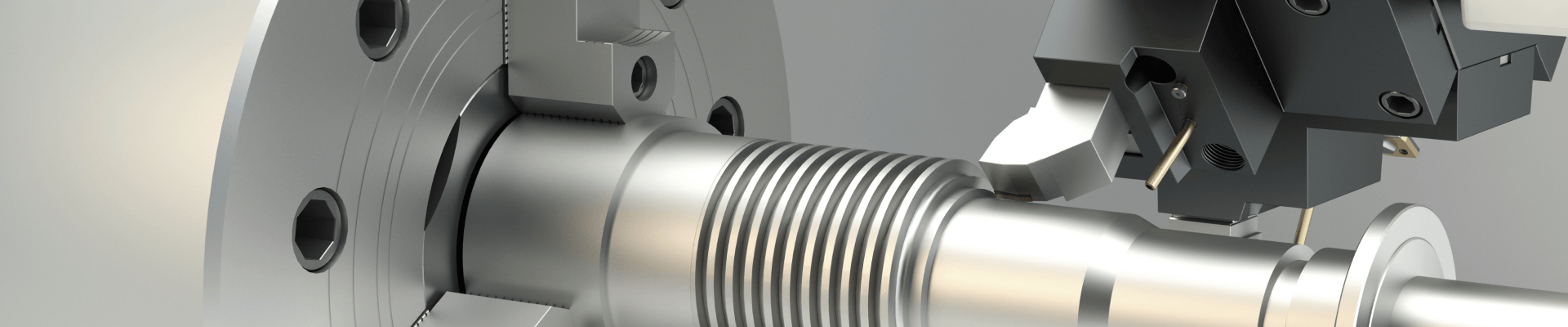


The application of metal fittings, screws, or nuts, and other fittings is mainly due to the continuous increase in mechanical equipment. Look at today's aerospace technology, or the application of CNC equipment, and the processing of mold fittings—all are assisted by mechanical equipment, which plays a relatively obvious role overall, improving processing speed and bringing certain benefits to manufacturers. This is quite good.
Engaged in mechanical processing and high-precision mechanical parts manufacturing, the selection and determination of blanks not only affects the economy of blank manufacturing but also affects the economy of mechanical processing. Therefore, when determining blanks, it is necessary to consider both hot working factors and economic factors, while also taking into account the requirements of cold working, so as to reduce the manufacturing cost of parts from the stage of determining blanks.
1. Castings:
Blanks for parts with complex shapes should preferably be manufactured by casting methods. Currently, most castings are produced by sand casting, which is further divided into manual molding with wooden patterns and machine molding with metal patterns. Castings from manual molding with wooden patterns have low precision, large machining allowances, and low production efficiency, making them suitable for single-piece or small-batch production or the casting of large parts. Machine molding with metal patterns has high production efficiency and high casting precision, but the equipment cost is high, and the weight of castings is also limited, making it suitable for medium and small castings in mass production. Additionally, a small number of small castings with higher quality requirements can use special casting methods, such as die casting, centrifugal casting, and investment casting.
2. Forgings:
Steel parts requiring high mechanical strength generally need forged blanks. Forgings include free forging blanks and die forging blanks. Free forging blanks can be obtained by manual hammering (small blanks), mechanical hammer forging (medium blanks), or press forging (large blanks). This type of forging has low precision, low production efficiency, large machining allowances, and the part structure must be simple, making it suitable for single-piece and small-batch production, as well as for manufacturing large forgings.
Die forgings have better precision and surface quality than free forgings, and the shape of the forgings can also be more complex, thereby reducing machining allowances. The production efficiency of die forging is much higher than that of free forging, but it requires special equipment and forging dies, so it is suitable for medium and small forgings in larger batches.
3. Profiles:
Profiles can be classified by cross-sectional shape into round steel, square steel, hexagonal steel, flat steel, angle steel, channel steel, I-beam, and other special cross-section profiles. Profiles are divided into hot-rolled and cold-drawn types. Hot-rolled profiles have low precision but are cheap, used for blanks of general parts; cold-drawn profiles have smaller dimensions and high precision, are easy to achieve automatic feeding, but are more expensive, mostly used for larger batch production and suitable for automatic machine tool processing.
4. Welded parts:
Welded parts are combined parts obtained by welding methods. The advantages of welding are simple manufacturing, short cycle time, and material savings; the disadvantages are poor vibration resistance and large deformation, requiring aging treatment before mechanical processing. Reasonable selection of blanks for precision parts in mechanical manufacturing not only saves material costs but also saves a large amount of processing time and improves production efficiency.
 Tel: 139 6254 0906
 Email: dengliangyu@suzhouleo.com
 Address: No. 118 Chang'an Road, Youyi Industrial Zone, Songling Town, Wujiang City