


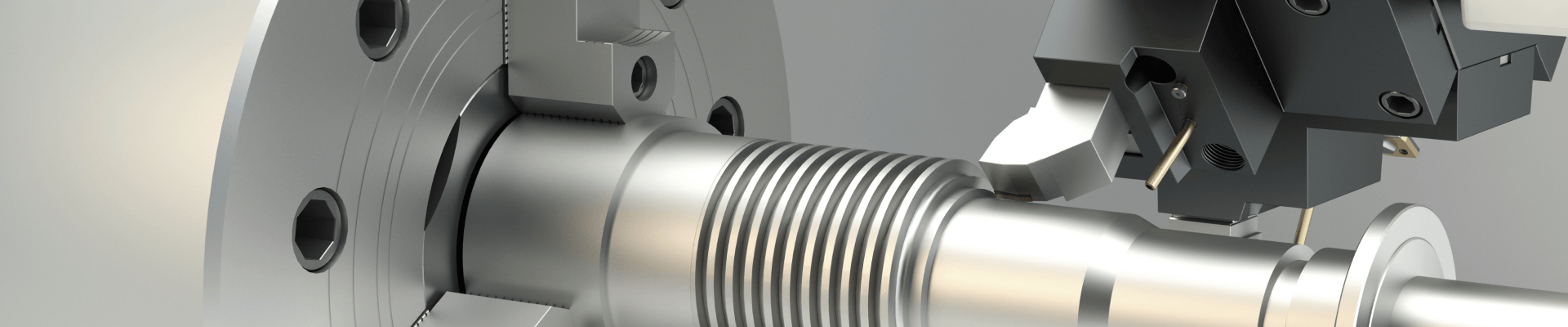


There are four types of surface treatment for machined mechanical parts:
1. Anodic oxidation:
A method of applying an oxide film containing metal cations to the surface of a workpiece, which is oxidized into a colored metal layer under appropriate conditions. The anodic oxidation process includes electrolytic oxidation, chemical oxidation, and plasma oxidation methods.
2. Electroplating:
A process method of depositing a metal film on the surface of a metal or alloy using chemical or electrolytic methods. Electroplating is the most widely applied and heavily used surface treatment technology in hardware processing. Currently, electroplated products have developed into more than thirty varieties, many of which have reached world-class levels, such as nickel plating, chromium plating, copper plating, and gold plating.
3. Chemical polishing:
A process method in which the surface of a workpiece undergoes chemical or electrochemical changes under the action of abrasives, chemical solvents, etc., to achieve the desired purpose.
4. Sandblasting:
A process method that uses mechanical means to create a fine sand-like roughness on the surface of a workpiece, thereby enhancing its surface friction characteristics.
In the structural design process of machined mechanical parts products, the following aspects need to be considered:
1. Weight of the parts:
During the design process of machined mechanical parts products, it is necessary to analyze and optimize the mechanical parts according to specific conditions, minimizing the weight of the mechanical parts as much as possible.
2. Material selection for mechanical parts:
When designing the product structure, appropriate materials should be selected based on the product's functional and cost requirements.
Characteristics of machined mechanical parts:
1. Quality stability:
Since the materials of mechanical parts are often various metals, significant deformation can occur during the machining process, making it difficult to ensure the quality of the finished hardware mechanical parts.
2. Machinability:
Because machined mechanical parts are composed of many small components, they can be easily replaced by other mechanical parts.
3. Material diversity:
The materials for machined mechanical parts can be various metals such as iron, copper, and aluminum.
4. Precision:
During the manufacturing process, the dimensional accuracy of mechanical parts is often required to be very high, and they are mostly components of precision instruments, requiring a smooth and uniform surface in mechanical manufacturing.
The CNC program for machined mechanical parts is a primary language in the CNC machining process, serving as an information symbol language used to represent CNC programs. It converts the CNC program into executable mechanical actions on the machine tool according to corresponding rules, and completes various machining operations by controlling the machine tool.
The CNC program is implemented by inputting it into a computer and can be regarded as a set of instructions. Generally, the computers used have relatively excellent control and programming systems, allowing the compilation and machining of CNC programs to be completed using the computer. For some small workpieces, due to their small specifications, relatively simple shapes, and the lack of need for extensive tool changes or tool compensation during machining, existing CNC equipment can be directly used.
However, for large workpieces, due to their complex structures, numerous types of mechanical parts, large dimensional specifications, and varied shapes, the machining process often requires frequent tool changes and adjustments to tool compensation amounts to determine machining accuracy. Generally, commonly used CNC machine tools include lathes, milling machines, machining centers, drilling-milling machines, and wire-cut EDM equipment. For these different types of CNC machine tools, the specific CNC machining process is essentially the same.
When compiling CNC programs for machined mechanical parts, the following issues need attention:
1. The machining plan should be determined based on the specific shape and dimensional requirements of the workpiece, correctly selecting the CNC program format;
2. When writing the program, unified programming software and programming instructions should be used as much as possible to avoid conflicts between different programming software and instructions;
3. When compiling the machining program, the tool path should be correctly selected based on the actual machining process and process route;
4. When compiling the machining program, the different working states of the CNC equipment should be taken into account;
5. When compiling the machining program, the tool path should be determined according to the different CNC equipment.
 Tel: 139 6254 0906
 Email: dengliangyu@suzhouleo.com
 Address: No. 118 Chang'an Road, Youyi Industrial Zone, Songling Town, Wujiang City